
The ‘Dos and Don’ts’ for Awards in 2026 and beyond: Transparency shouldn’t be optional.
Some awards insights by Karen Sutton, Global Good Awards and Assessor for the Independent Awards Standards Council
When I founded the Global Good Awards (GGA) in 2015, creating a transparent awards programme seemed like common sense. Why wouldn’t judging be independent? Why wouldn’t pricing be clear? Why wouldn’t entrants receive feedback explaining why they won or didn’t win? To me, these weren’t lofty ideals – they were simply obvious fundamentals and the right way to do things.
What I’ve learned since is that awards are not all cut from the same cloth. There are vanity awards out there which should be avoided like the plague (see this article), but this summary focuses on important details which can make the difference between a valid awards programme deserving consideration or not.
So, organisations entering awards face complex decisions about which awards to enter, re-enter, or avoid altogether. And like all buying decisions in 2026, those choices are increasingly more important to justify.
In 2018, GGA applied for an Awards Trust Mark (ATM) – an accreditation designed to enhance trust between those entering awards programmes and the organisations running them. The ATM was founded after research into awards applicants showed (a) concerns about certain practices, and (b) a marked appetite for an accreditation. I was delighted that we obtained the highest ‘Outstanding’ standard, and have retained it every year since.
In 2019, I proudly accepted an invitation to sit on the council for the ATM and become an assessor for other awards applying. (No, I don’t assess my own awards: of course not!) Requiring validation from both entrants and judges for the higher tiers is a crucial part of the accreditation process, and is guaranteed to winkle out any unscrupulous processes!
I now use my voice as a member of council to highlight the challenges the sector faces and shine a spotlight upon those awards which are reputable… and those which aren’t. I also offer my time as a consultant to awards organisers who want to improve their processes and need a bit of help in getting there.
So, as times change, what are companies entering awards wanting to see award organisers continue to do or do differently in 2026?
As I’ve alluded to above, a transparent and robust judging process is top of the list, and the Awards Trust Mark was established for that very reason. According to research(1) conducted by the founders of ATM, Boost Awards, perceived trust in the judging process is one of the most influential factors for businesses when choosing which awards to enter.
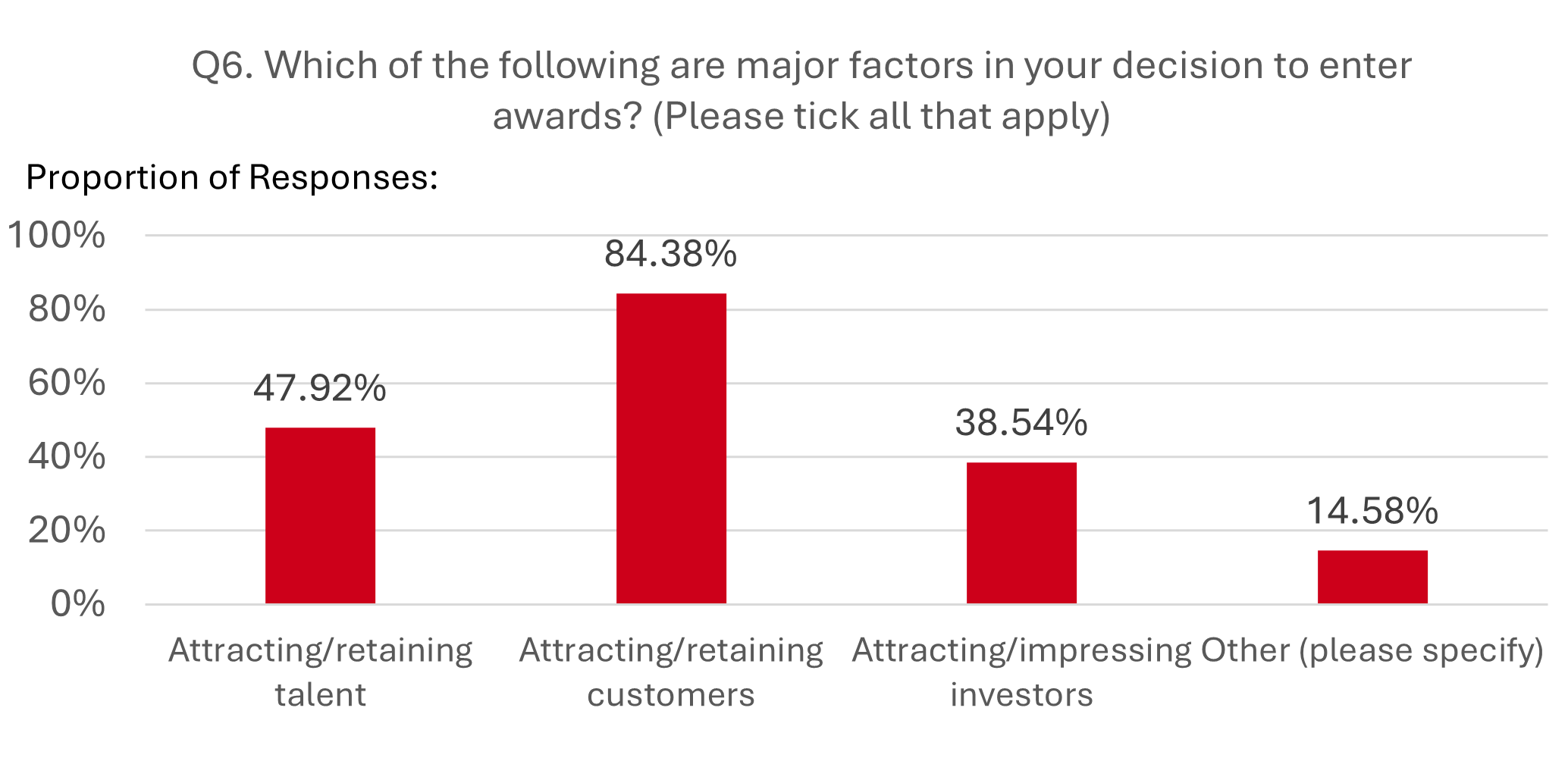
It’s important to recognise the impact an award win can have on the reputation of your company, so return on investment is also a growing trend amongst entrants – as, let’s face it, entering awards can be a costly exercise. Boost’s research(1) revealed a massive 84% stating that they enter awards to attract or retain customers, with 48% entering to attract or retain talent. 58% also stated that ‘getting feedback from the judges’ increased the chances of choosing a programme to enter. These are not numbers to be ignored!
The Dos

Offering a hybrid option for the ceremony is becoming increasingly important. Having the flexibility of attending in-person or virtually shows finalists that you’re not only considering their time and budget, but also the environmental impact of their travel – especially for international awards.
And on the topic of sustainability, while industry-specific awards are consistently rated the most important in a company’s award entry strategy (87% place them as their most important¹), the ESG/sustainability sectors are on the upward trend, with 25% of orgs saying these are the most important. And as the founder of GGA, that’s music to my ears!
Entrants want to be part of something special; an event that means something and which has a conscience, whether they come away with a win or not. And, as with any industry, these are your customers, so award organisers need to start listening to them. Out with the black tie and steak dinners, and in with a fresh, meaningful vibe!
Our GGA entrants often tell me that when they have what they think is a worthy potential winner of a project, they’re likely to enter it into multiple awards. This saves on budget and spreads the chances of a win with increased exposure. (This is also backed up by research, with 67% saying they enter more than three awards per year.(1))
The Don’ts
Probably most pertinent to this article is what puts award entrants off when considering their award strategy.
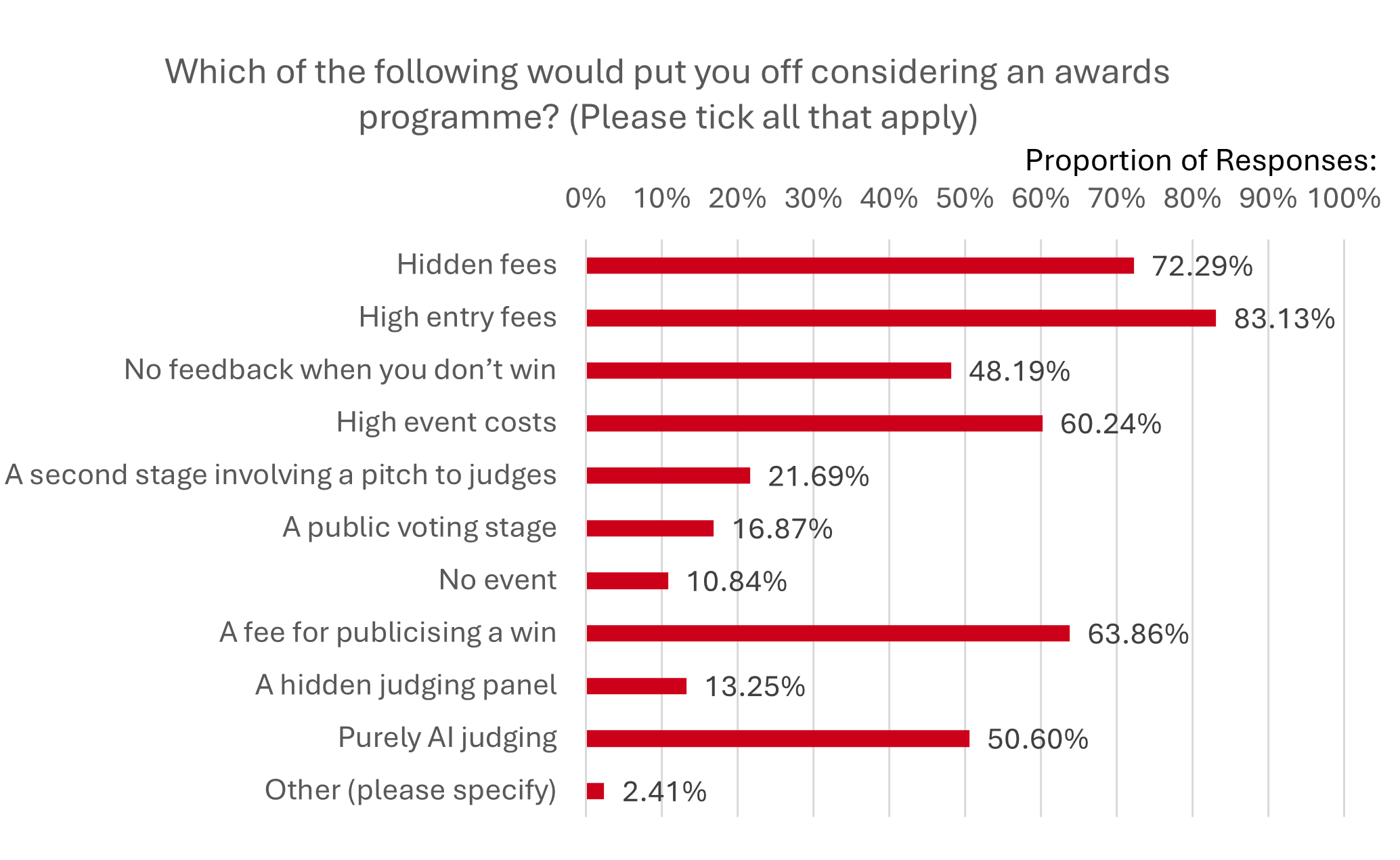
A whopping 72% say it’s ‘hidden fees’, while 64% say it’s ‘fees for publishing a win’¹ – a real bugbear of mine. WHY would an awards programme want to charge you for promoting their award programme? Honestly, I don’t get it…
And that brings me back to the Awards Trust Mark: neither of those fees would pass the accreditation process.
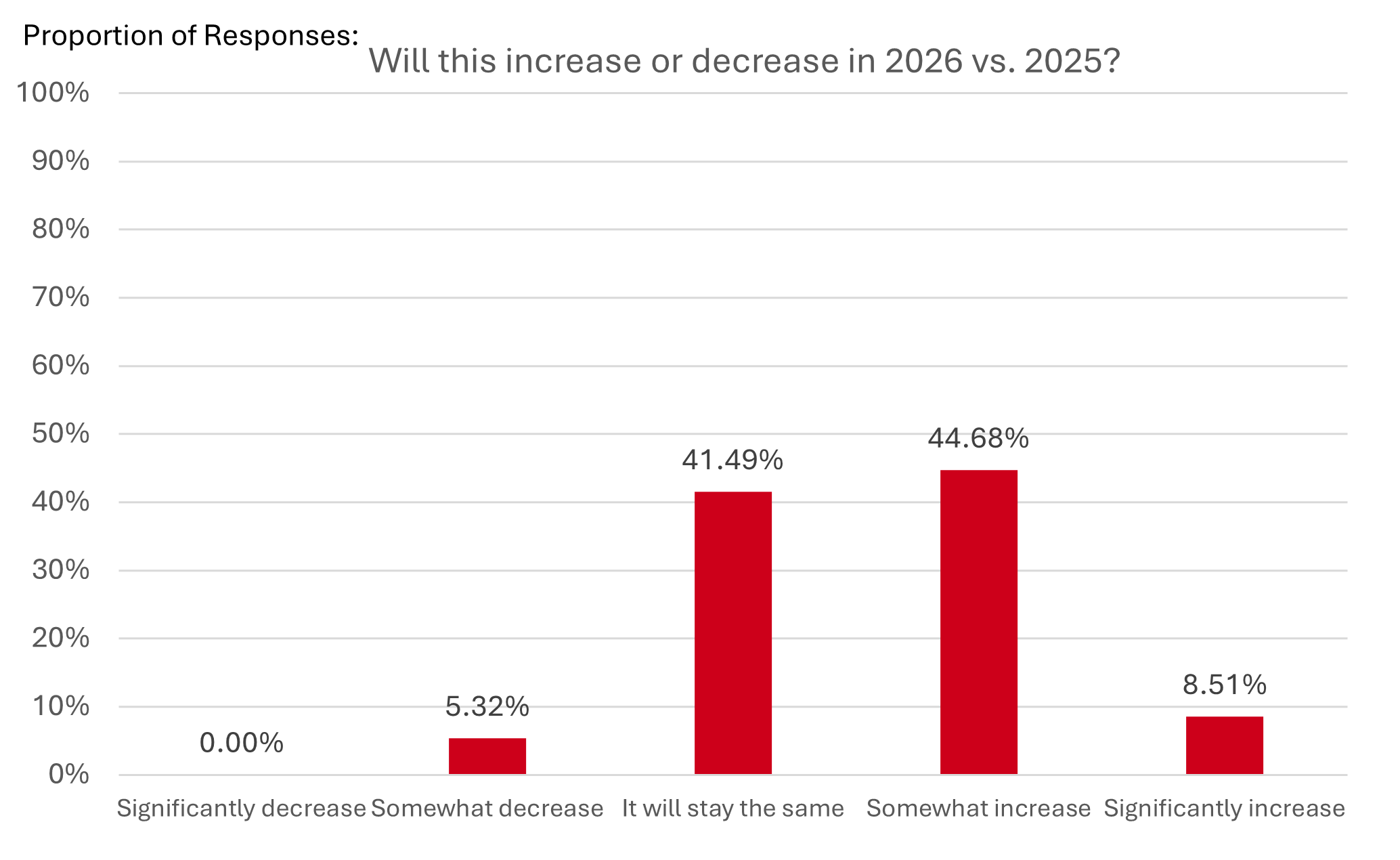
Finally, a surprising but encouraging stat for me was the appetite for entering more awards this year. Even with global economic uncertainty, only 9% of people said they’re likely to reduce the number of awards they enter in 2026. 45% said their award entries will in fact increase, with 9% saying significantly so.(1)
Next steps?
If you’re an award organiser and want help improving your processes, contact me for more information. If you feel you already have a great programme, then why not apply for an Awards Trust Mark? Mention this article and get 10% off your first year’s application fee.
Good luck with your awards – either entering them or running them!
Karen
¹ You can read the full ‘Awards Best Practice Research Findings 2026’ here for more insight on entrant behaviour.